
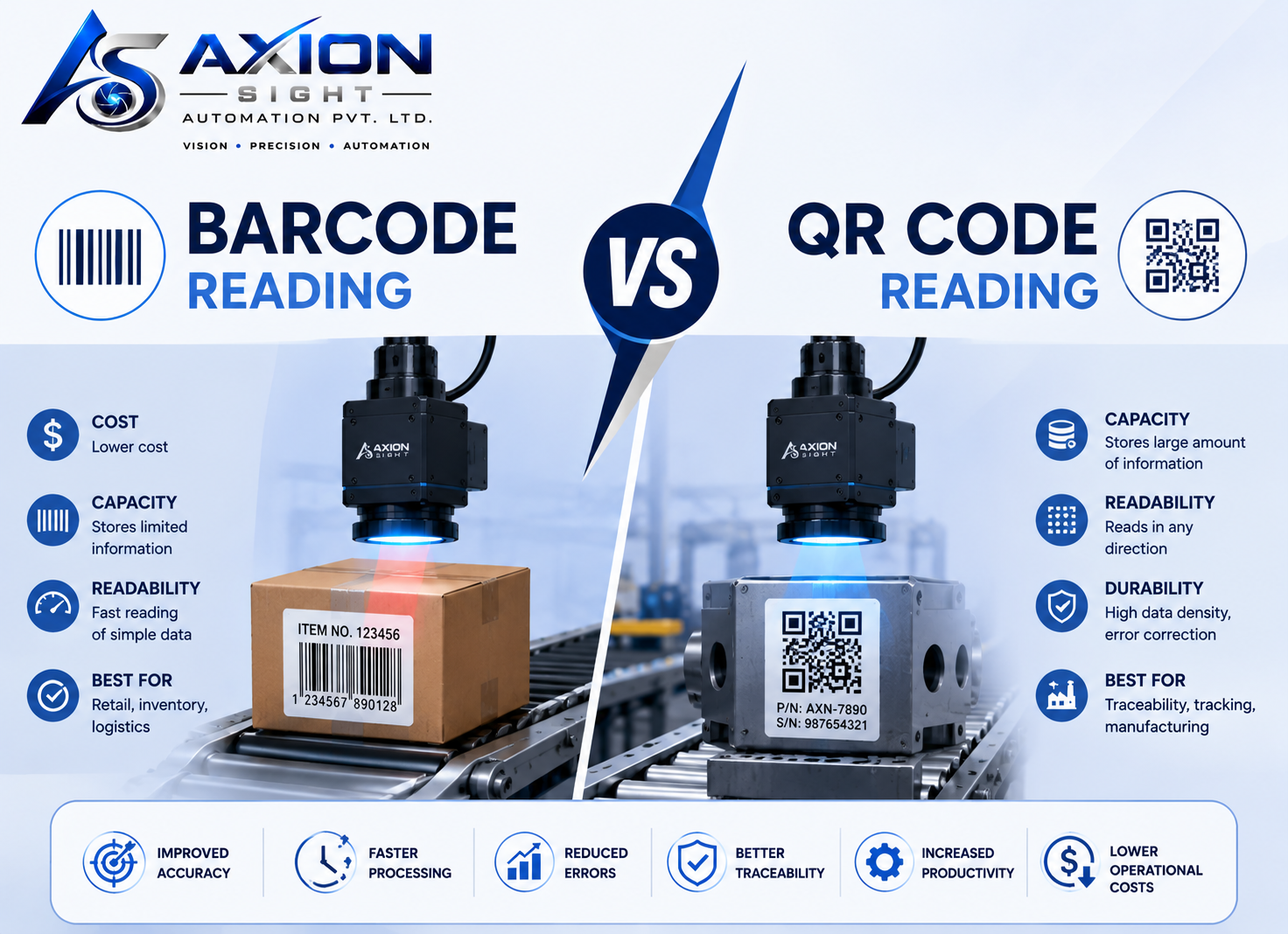
Barcode and QR code reading technologies are widely used for product identification, inventory management, and data tracking across industries. While traditional barcodes store information in a one-dimensional (1D) format and are ideal for basic product identification, QR codes use a two-dimensional (2D) structure that can store significantly more data, including text, URLs, serial numbers, and tracking information. QR codes are also more durable, as they remain readable even if a portion of the code is damaged.
Choosing between barcode and QR code reading depends on your business requirements. Barcode scanners are cost-effective and well-suited for retail, warehousing, and logistics applications where simple identification is sufficient. QR code readers, on the other hand, offer greater flexibility, faster data access, and enhanced security, making them ideal for manufacturing, healthcare, supply chain management, and digital interactions. By selecting the right code-reading technology, businesses can improve operational efficiency, accuracy, and traceability while streamlining their workflows.